A complete guide to understanding sorbitol, its natural origin, health benefits, and industrial uses
5 min read · By H.L Agro
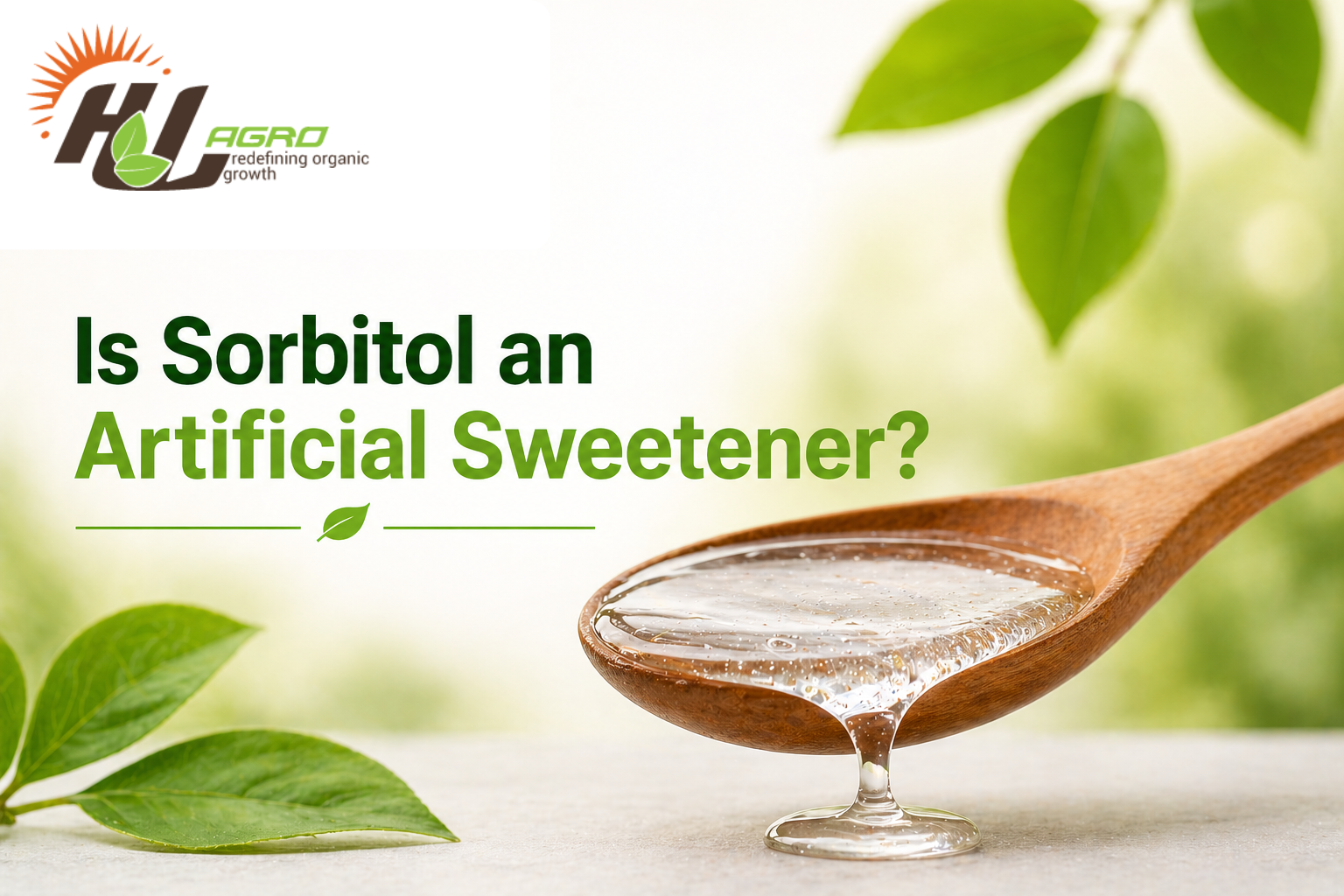
Walk into any sugar-free aisle and you’ll often see sorbitol listed in products like chewing gum, diabetic chocolates, and toothpaste. This raises a common question: Is sorbitol an artificial sweetener?
The answer is more nuanced than a simple yes or no. Understanding what sorbitol really is can help consumers and manufacturers make better choices.
What is Sorbitol?
Sorbitol is a type of sugar alcohol (also known as a polyol) that was first discovered in mountain ash berries in 1872. It naturally occurs in fruits such as apples, pears, peaches, and plums.
Commercially, sorbitol is produced by hydrogenating glucose, which is typically derived from corn starch. Despite this processing, the final product is chemically identical to the sorbitol found in nature.
Because of this, sorbitol is widely referred to as a nature-identical sweetener.
Is Sorbitol Natural or Artificial?
Sorbitol is neither purely natural nor artificial — it falls into a unique category known as nature-identical ingredients.
Unlike artificial sweeteners such as aspartame or saccharin, which are fully synthetic and have no natural equivalent, sorbitol exists naturally in foods and is simply produced at scale for commercial use.
Regulatory Status of Sorbitol
Sorbitol is globally approved and recognized as safe:
- Approved by the FDA (USA)
- Classified as E420 by EFSA (European Union)
- Approved by FSSAI (India)
It is also listed as GRAS (Generally Recognised As Safe) and is not classified as an artificial sweetener in major regulatory frameworks.
Where is Sorbitol Used?
Sorbitol is widely used across multiple industries due to its sweetness, stability, and moisture-retaining properties.
Food and Confectionery
- Sugar-free chewing gum
- Candies and sweets
- Diabetic-friendly chocolates
- Baked goods
Pharmaceuticals
- Tablet coatings
- Syrups and lozenges
- Medicinal laxatives
Cosmetics and Personal Care
- Toothpaste and mouthwash
- Skincare creams (as a humectant)
Bakery Applications
- Helps retain moisture
- Extends shelf life naturally
Health Benefits of Sorbitol
Sorbitol offers several advantages over regular sugar, making it a preferred ingredient in many health-conscious formulations.
1. Tooth-Friendly
Sorbitol is not fermented by harmful oral bacteria, which reduces the risk of tooth decay. This makes it ideal for dental care products like toothpaste and chewing gum.
2. Low Glycaemic Index
With a glycaemic index of around 9 (compared to glucose at 100), sorbitol causes a much slower rise in blood sugar levels. This makes it suitable for diabetic-friendly products.
3. Lower Calories
Sorbitol provides approximately 2.6 kcal per gram, which is significantly lower than sugar (4 kcal per gram). This supports weight-conscious and reduced-calorie diets.
Why Sorbitol is Not an Artificial Sweetener
- It is chemically identical whether natural or manufactured
- It is not fully synthetic like artificial sweeteners
- It is globally approved and classified as safe
Conclusion: Sorbitol is best described as a nature-identical sugar alcohol, not an artificial sweetener.
H.L Agro – Trusted Sorbitol Manufacturer in India
H.L Agro is a leading manufacturer of high-quality sorbitol, supplying both pharma-grade and food-grade solutions to global markets.
Key strengths include:
- BRCGS certified manufacturing
- Consistent product quality
- Reliable global supply chain
For more information, visit: Sorbitol – HL Agro